
Beyond Chatbots: The Rise of ‘Agentic AI’ Apps
Remember 2023? That was the year we all gasped because a computer could write a poem about a toaster in the style of Shakespeare. Then came 2024, the year we spent arguing with those chatbots to get the facts right.
Well, welcome to December 2025. The novelty of talking to a robot has officially worn off. We don’t want to chat anymore; we want to get things done. Enter the era of Agentic AI.
If 2024 was the year of the “Smart Librarian” (who knew everything but couldn’t leave the desk), 2025 is the year of the “Smart Intern.” These new apps don’t just give you a lasagna recipe; they check your pantry inventory, add the missing ingredients to your Instacart cart, and schedule the delivery for when you get home.
Let’s dive into why “Agents” are the biggest shift in mobile apps since the App Store launched, and which ones you need on your phone right now.
What is “Agentic AI” Anyway?
In plain English, an AI “Agent” is software that has permission to click buttons for you.
Traditional chatbots (like the old ChatGPT) were text-in, text-out. You asked for a travel itinerary, and it gave you a list. You still had to go to Expedia, find the flights, enter your credit card, and hit book.
Agentic apps skip the middleman – which, ironically, is you. They are built with “tool use” capabilities. They can open a browser, navigate to a website, fill out forms, and execute transactions based on a broad goal you give them.
The Big Three: The Heavy Hitters of 2025
The reason everyone is talking about this right now is that the tech giants just dropped their big holiday updates. If you haven’t updated your apps this week, here is what you are missing.
1. Google’s “Project Jarvis” (Finally Here)
Rumored for months, Google officially rolled out its “Jarvis” features into the Chrome mobile app this week. It is a browser companion that lives on top of your web surfing.
- The Killer Feature: “Research and Buy.” You can tell it, “Find me a pair of running shoes under $120 with good arch support and buy them.” Jarvis doesn’t just list shoes; it actually navigates to the store, puts them in the cart, and prepares the checkout screen for your final fingerprint approval. It’s terrifyingly convenient.
2. OpenAI’s “Operator”
Not to be outdone, OpenAI’s new “Operator” feature is now live for Plus subscribers. While Google focuses on the web, Operator focuses on tasks.
- The Killer Feature: Admin work. You can upload a PDF of a messy invoice and say, “Pay this.” Operator extracts the data, opens your banking app (via secure API), and stages the payment. It’s the closest thing to having a personal assistant who handles your boring paperwork.
3. Apple Intelligence & iOS 19’s “Screen Awareness”
If you have an iPhone 16 or 17, you’ve likely noticed Siri acting differently since the iOS 19.2 update dropped a few days ago.
- The Killer Feature: Cross-App Action. Siri now has “Onscreen Awareness.” If you are looking at a restaurant on Instagram, you can just say, “Book a table here for Friday at 7.” Siri recognizes the restaurant name from the image, opens OpenTable (or the restaurant’s own site), and starts the booking process without you ever typing a letter.
The “Must-Have” Agent Apps for Regular People
Okay, so the big guys are doing it. But what about the apps you actually use? Here are three third-party winners that are nailing the agentic trend.
Sintra (Productivity)

Sintra started as a business tool, but in late 2025, it went viral with freelancers. It’s an “automation agent” that connects your Gmail, Slack, and Trello.
- Why it’s cool: You can tell it, “I’m going on vacation next week.” Sintra will autonomously draft out-of-office replies, reschedule your meetings, and notify your key contacts. It doesn’t just draft the emails; it actually schedules them in your calendar.
Hopper 2.0 (Travel)
Travel apps have always used algorithms to predict prices, but the new update turns them into active agents.
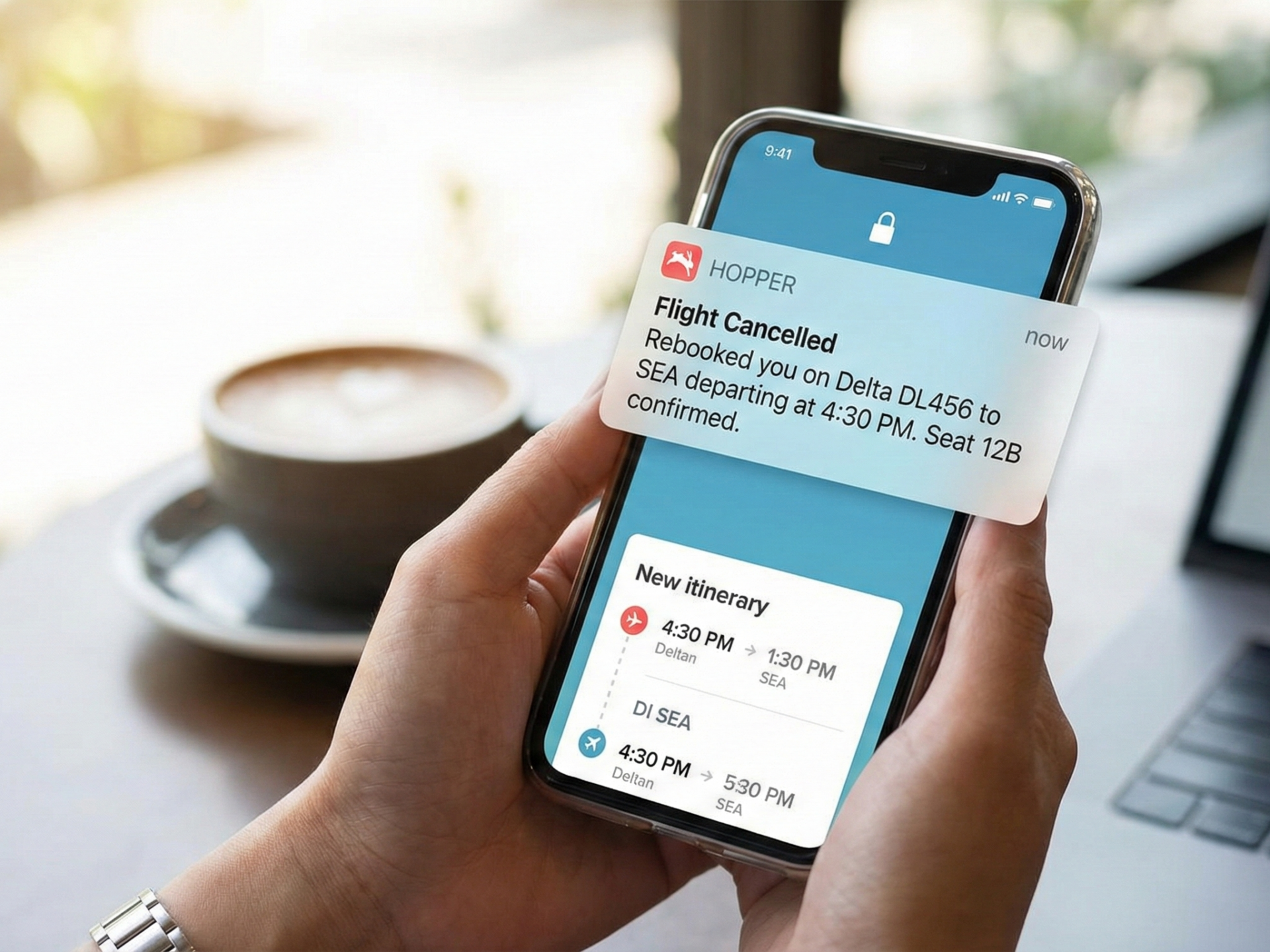
- Why it’s cool: The “Disruption Agent.” If your flight is cancelled while you are in the air (thanks, in-flight Wi-Fi), the app detects it and autonomously books you on the next best alternative before you even land. It uses the payment info on file to secure the seat while everyone else is sprinting to the customer service desk.
Focus Friend (Health)

Its agentic features are wild.
- Why it’s cool: It negotiates your screen time. If you try to open TikTok during a “Focus Session,” the agent doesn’t just block you; it opens your Kindle app instead and navigates to the page you were last reading. It actively redirects your bad habits.
The “Oops” Factor: Why Humans Are Still Necessary
Before you hand over your entire life to a digital agent, a word of warning. We are in the “trust but verify” stage of this technology.
There have already been funny (and expensive) stories popping up on Reddit this week. One user reportedly told their shopping agent to “buy a lot of toilet paper” and ended up with a pallet of industrial-sized rolls delivered to their studio apartment.
Agentic AI is literal. If you tell it to “Book the cheapest flight,” it will book the cheapest flight – even if it has three layovers and a 14-hour wait in a non-heated airport terminal. You still need to be the manager who approves the final work.
The Verdict
We are witnessing the death of the “App Shuffle” – that annoying dance of copying an address from WhatsApp, switching to Maps, pasting it, switching to Uber, and pasting it again.
Agentic AI is the glue that finally connects all our isolated apps together. It’s exciting, it’s efficient, and yes, it’s a little bit lazy. But hey, if it gives us back 20 minutes of our day, I say welcome to the team, robot intern.