
AI Homework Helpers: The Controversial Apps Changing Student Life
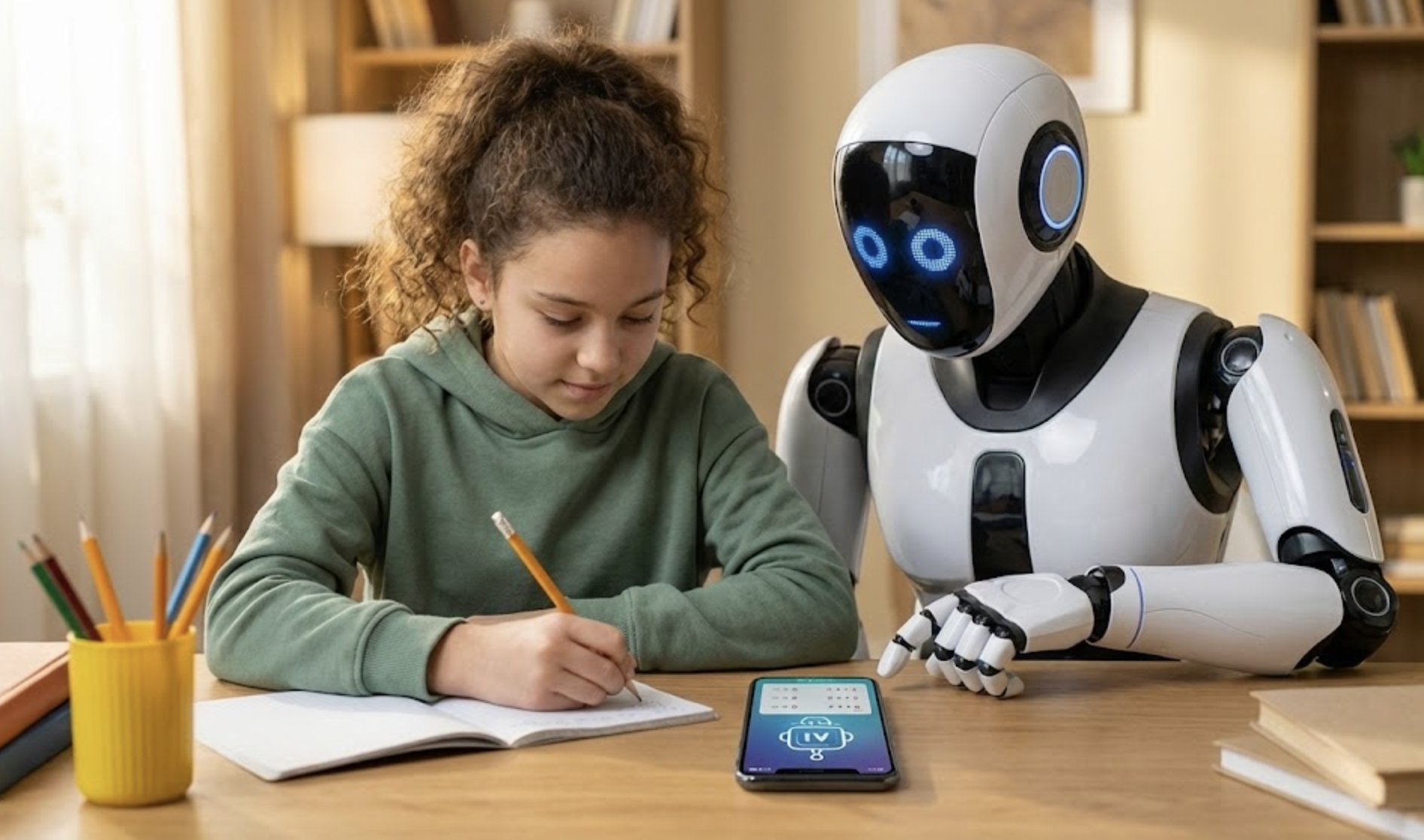
Remember back in 2023 when ChatGPT first burst onto the scene and educators collectively gasped? There was panic about the death of the college essay, fears of mass cheating, and some very confused plagiarism detectors.
Well, three years later, the dust has mostly settled. The apocalypse didn’t happen. Instead, artificial intelligence has quietly moved from a terrifying novelty to a standard icon on almost every student’s smartphone home screen. It has become the modern equivalent of the scientific calculator in the 1980s, banned by some, embraced by others, but undeniably present.
For mobile app users today, the question isn’t “What is AI?” but rather, “Which AI app is actually going to help me pass chemistry without doing the work for me?”
1. The “Good Guy”: Khanmigo by Khan Academy
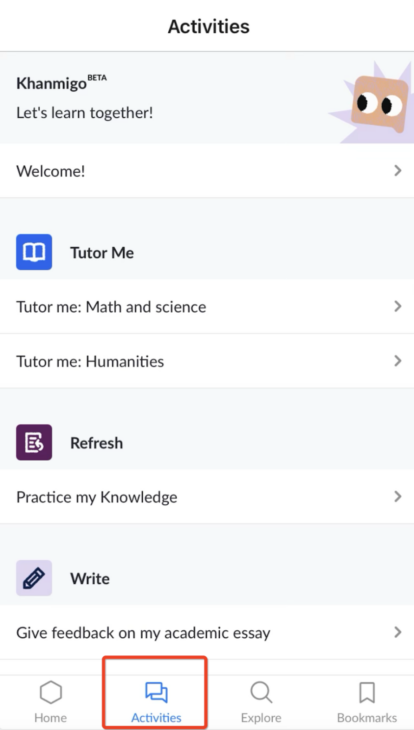
If you want to use AI without feeling a crushing sense of moral guilt, this is your app. While other apps race to give you the answer in 0.5 seconds, Khanmigo refuses to tell you anything.
- The Vibe: That really patient teacher who answers your question with another question.
- 2026 Status: Now fully integrated into the main Khan Academy app, it uses what they call “Socratic Architecture.”
- Why it’s cool: If you type “What is the capital of France?”, it won’t just say “Paris.” It might ask, “Well, which city is home to the Eiffel Tower?” It forces you to think. In 2025, they added the “Debate Mode,” where you can argue with historical figures (simulated, obviously) to prep for history exams. It’s nerdy, ethical, and effective.
2. The “Speed Demon”: Gauth (formerly Gauthmath)
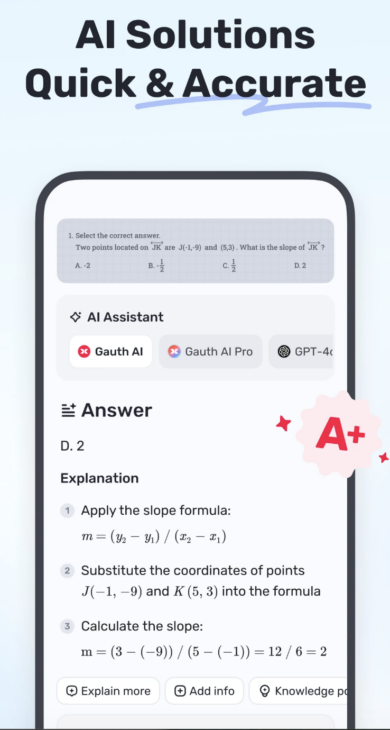
On the complete opposite end of the spectrum sits Gauth. Owned by ByteDance (the folks behind TikTok), this app has exploded in popularity over the last 18 months for one simple reason: it is fast.
- The Vibe: The smart kid who lets you copy their homework in the cafeteria for $5.
- The Controversy: Teachers hate this app. It scans handwritten problems and spits out the solution instantly.
- Why students use it: In 2026, its “Expert Verification” system is frighteningly accurate. While the AI handles the basics, complex calculus problems are often routed to human super-users who verify the steps. It’s effective, but let’s be real – if you use this for everything, you aren’t learning; you’re just transcribing.
3. The “Math Wizard”: Photomath (by Google)
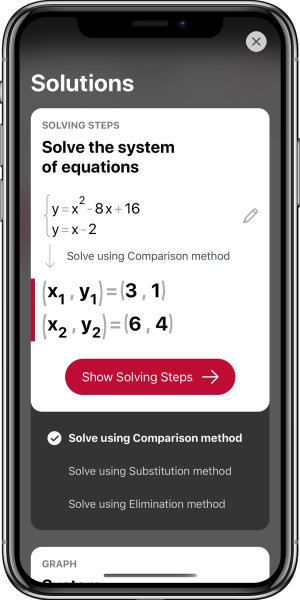
You probably remember Photomath from high school. Google acquired it back in 2023, and by 2026, it has become the gold standard for anyone struggling with numbers.
- The Vibe: A magic wand for anxiety-inducing equations.
- The Upgrade: It used to just solve the problem. Now, integrated deeply with Google Lens, it can recognize word problems and graphs. It doesn’t just give you X = 5; it breaks down the “Why” with animated steps.
- Best Feature: It works offline. Perfect for that basement classroom where the Wi-Fi goes to die.
4. The “New Study Buddy”: Gizmo
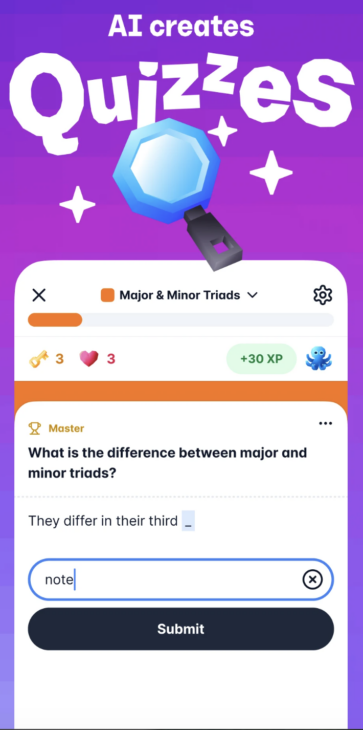
With Quizlet retiring some of its best AI features last year, Gizmo has officially taken the throne as the ultimate study companion for 2026.
- The Vibe: Gamified, aesthetic, and dangerously addictive.
- 2026 Status: This is the app that took over TikTok. You can paste a YouTube link or a messy PDF of your notes, and Gizmo’s AI instantly turns it into a gamified quiz.
- Why it wins: It uses “Active Recall” but hides it inside a game. You aren’t “studying”; you’re trying to keep your streak alive and level up your pet avatar. It’s the only app that makes memorizing biology terms feel like playing Duolingo.
5. The “Crowdsourced” Hybrid: Brainly
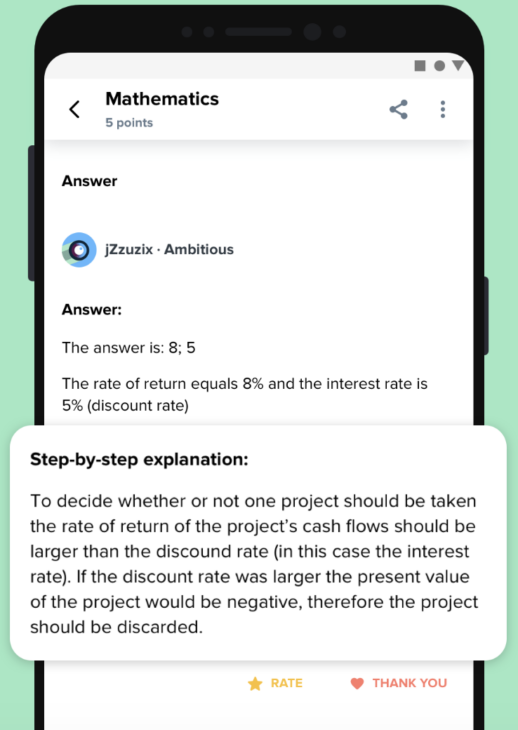
Sometimes, AI just doesn’t get it. When you have a weirdly phrased history question or a specific worksheet from your teacher that confuses the robots, you need Brainly.
- The Vibe: The world’s biggest study group where everyone is actually helpful.
- 2026 Status: Brainly has mastered the “AI Sandwich.” You snap a photo, and their “AI Companion” gives you an instant answer. But, and here is the kicker, if you are unsatisfied, you can toggle to the “Community Verification” mode, where real students and moderators check the work.
- Why it wins: It solves the hallucination problem. If the AI is confident but wrong, the community rating system usually flags it within minutes. It’s the best of both worlds: robot speed with human oversight.
Which App is For You?
If you are staring at the App Store confused, here is the breakdown of the 2026 landscape:
| App Name | Best For… | “Cheating” Risk Level | Unique Feature |
| Khanmigo | Genuine learning & understanding | Low (It won’t give answers) | Socratic dialogue & debate mode. |
| Gauth | 11 PM panic when you just need the answer | High (Very tempting to copy) | Human-verified expert solutions. |
| Photomath | STEM subjects & Calculus | Medium | Step-by-step animated logic. |
| Gizmo | Memorization & Exam Prep | Low | Turns YouTube videos into quizzes. |
| Brainly | Niche questions & verifying AI answers | Medium | Real human community backup. |
The Controversy That Won’t Die
Despite these apps being “normal” now, the debate rages on. The biggest concern in 2026 isn’t plagiarism (teachers have mostly figured out how to spot that); it’s “Cognitive Atrophy.”
The danger isn’t that the AI is wrong; it’s that the AI is too convenient. When the path to the answer is always one tap away, students never learn to sit with the struggle. We are seeing a generation brilliant at editing, but terrified of the blank page. — Dr. Aris Thorne, Educational Strategist, January 2026
The Verdict
So, are these apps productivity miracles or learning crutches?
As with most things in tech, the answer lies in your intent. If you use Gauth to bypass the work, you are cheating yourself. But if you use Khanmigo to understand why you got the answer wrong, it is the most powerful equalizer in educational history.
My advice? Download the tutor, delete the solver, and maybe, just maybe, try to do one math problem without your phone today. You might surprise yourself.