
The Top 5 Personal Finance Apps of 2026
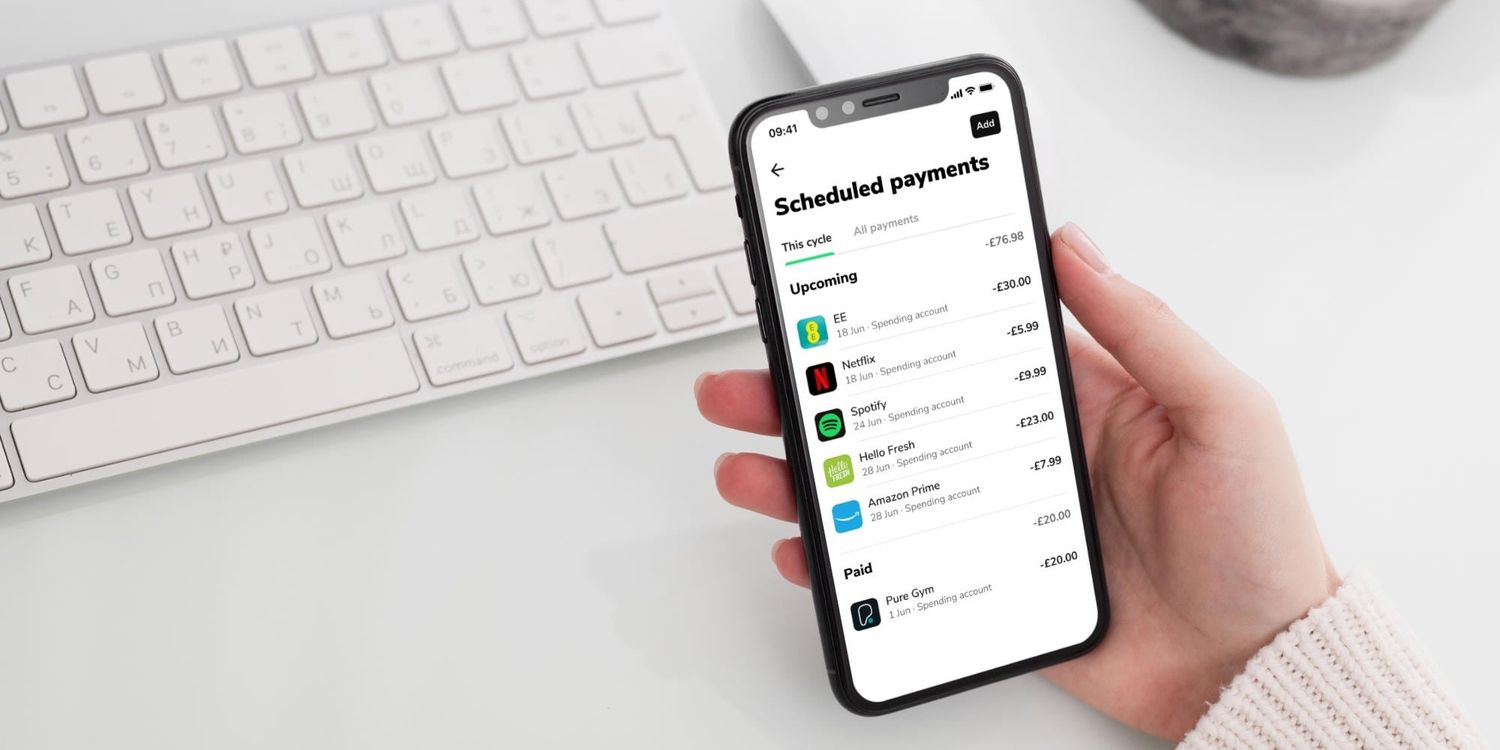
We are well into 2026, and if you are still manually entering your grocery receipts into a chaotic, color-coded Excel spreadsheet, I sincerely admire your stamina. But honestly, it is time to let the algorithms do the math.
The personal finance landscape has evolved significantly. We have officially moved past the era of apps that simply show you a pie chart of your past mistakes. Today’s top mobile applications actively analyze your cash flow, negotiate your bills, and use artificial intelligence to predict exactly when your utility bill is going to spike.
If you are ready to finally get your wallet under control, here is exactly why you need to upgrade your financial toolkit right now.
Quick 2026 App Comparison
To make your download decision even easier, here is a quick breakdown of what these top contenders do best:
| App Name | Primary Budgeting Style | Best Suited For | Learning Curve |
| YNAB | Zero-Based | Serious debt payoff and discipline | Steep |
| Monarch Money | Net Worth Tracking | Couples and holistic wealth planning | Moderate |
| Rocket Money | Cash Flow Defense | Killing old subscriptions and saving money | Low |
| PocketGuard | “In My Pocket” Limit | Stopping over-spenders at the register | Low |
| Copilot | Predictive / Automated | iPhone users seeking an AI-driven, visual experience | Low |
The Top 5 Financial Apps on the Market
If you are convinced it is time to call in digital reinforcements, you need to pick a system that matches how your brain naturally views money. Here are the heavy hitters of 2026.
1. YNAB (You Need A Budget): The Financial Drill Sergeant
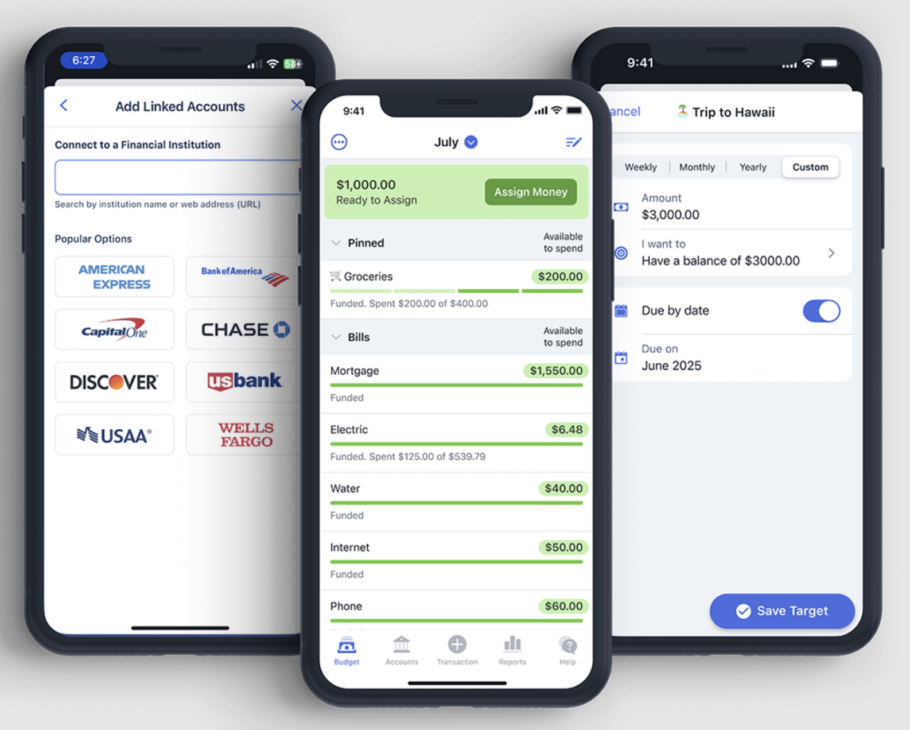
If your goal is to aggressively pay off debt or stop living paycheck to paycheck, YNAB is the undisputed king. However, you should know right away that this app is not passive; it requires your active participation.
YNAB operates on a strict “zero-based budgeting” philosophy. The moment your paycheck hits your bank account, the app forces you to assign every single dollar a specific job. You allocate funds into digital envelopes for rent, groceries, and debt before you even think about spending them.
- The Best Feature: True Expenses tracking. It forces you to break down large, infrequent bills (like annual car registration) into manageable monthly chunks so you are never caught off guard.
- The Vibe: A strict but loving financial coach who will not let you buy a coffee until you admit where the money is coming from.
2. Monarch Money: The Ultimate Wealth Dashboard
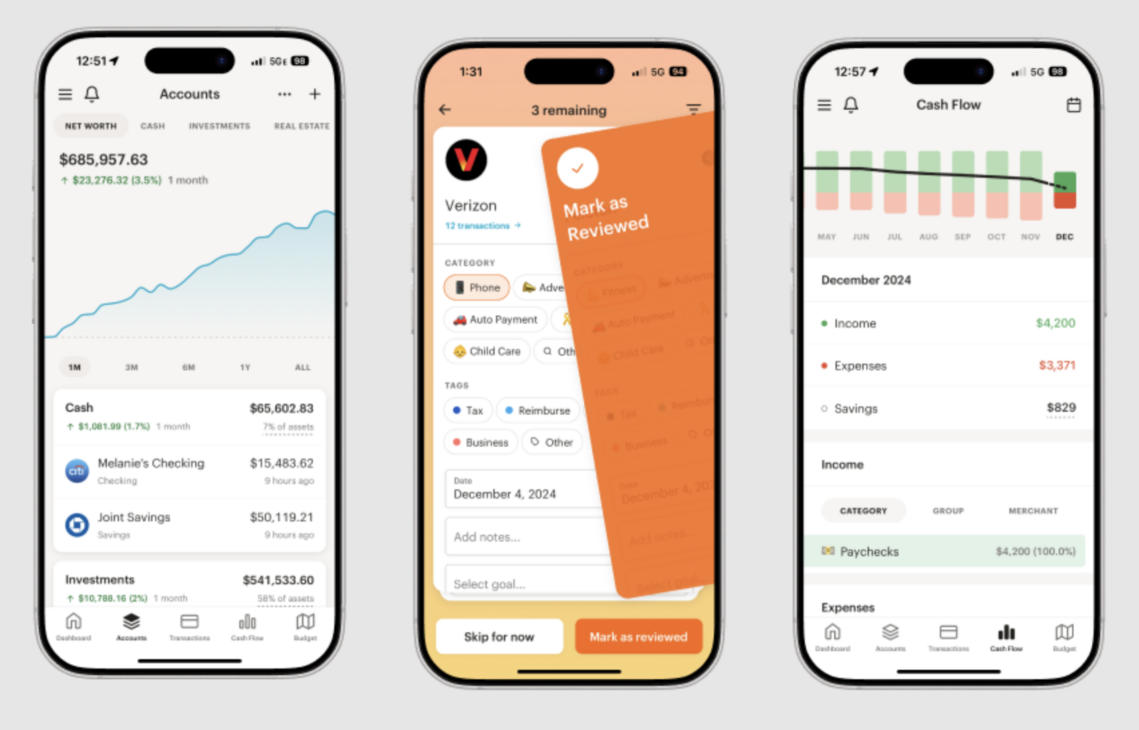
When legacy budgeting apps started shutting down a few years ago, Monarch Money stepped in and essentially perfected the all-in-one financial dashboard. It is a premium, ad-free experience designed for people who want a bird’s-eye view of their entire net worth.
Instead of just tracking your checking account, Monarch syncs flawlessly with your investment portfolios, 401(k), real estate values, and even cryptocurrency wallets.
“Monarch shines brightest for households. Its seamless multiplayer mode allows partners to log in with separate credentials, view shared goals, and politely nudge each other about questionable online purchases.”
- The Best Feature: The completely customizable dashboard. You can drag, drop, and hide financial widgets so you only see the data you actually care about.
- The Vibe: The modern, incredibly sleek spreadsheet replacement for professionals.
3. Rocket Money: The Subscription Assassin
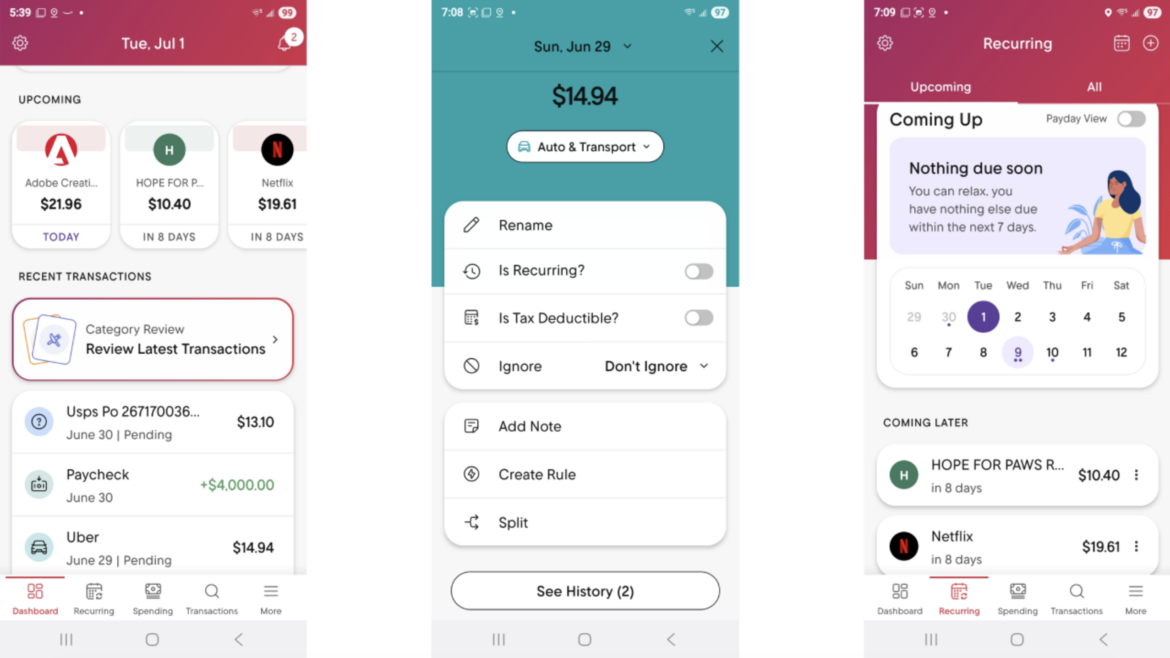
You signed up for a service to watch one specific show three years ago, and you are still paying for it. If this sounds painfully familiar, Rocket Money is the tool you need.
While it functions as a standard budgeting app, Rocket Money’s true superpower is cash flow defense. Once you connect your bank accounts, it scans your transaction history to flag every single recurring charge. If you find a subscription you do not want, you can literally tap a button in the app, and Rocket Money’s concierge team will contact the company and cancel the service on your behalf.
- The Best Feature: Bill negotiation. The app can analyze your internet or cell phone bill, call your provider, and negotiate a lower rate, splitting the savings with you.
- The Vibe: Your personal financial bodyguard that absolutely hates hidden fees.
4. PocketGuard: The Dummy-Proof Daily Limiter
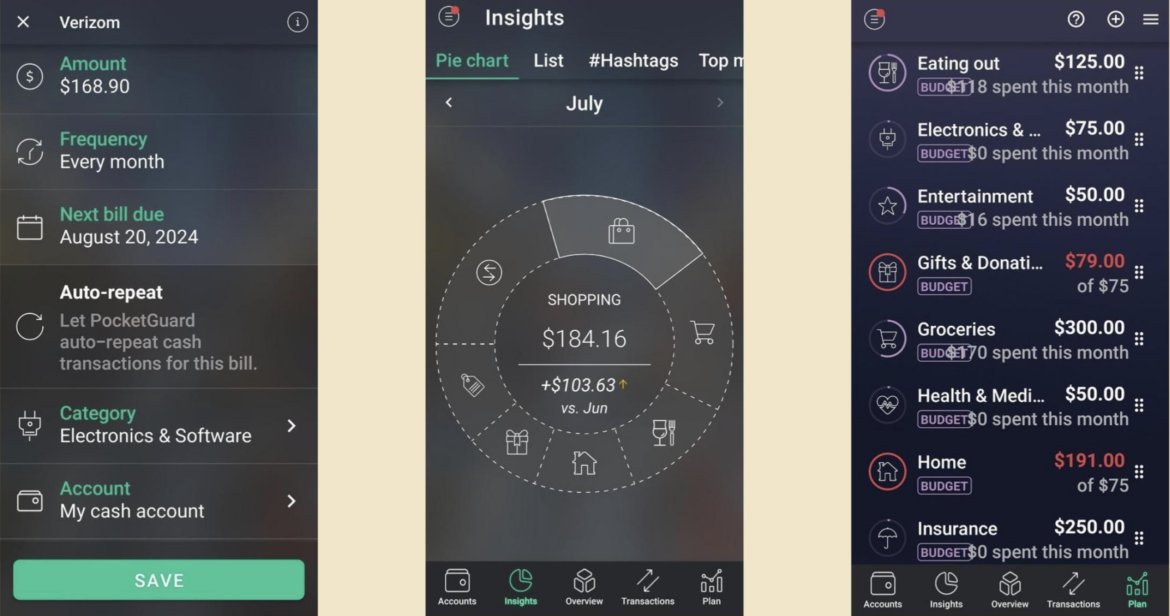
Sometimes, you do not want to analyze a 15-year retirement projection. You just want to open your phone and know exactly how much money you can safely spend at a restaurant tonight without ruining your life.
PocketGuard simplifies your financial existence down to one magic number: the “In My Pocket” balance. The app calculates your total income, subtracts all of your upcoming bills, removes your savings goals, and leaves you with a single, safe spending limit.
- The Best Feature: The pie chart avoidance. By focusing purely on what is safe to spend today, it completely removes the anxiety of traditional budget forecasting.
- The Vibe: The honest friend who tells you exactly how much pizza you can afford right now.
5. Copilot Money: The AI-Powered Apple Guardian
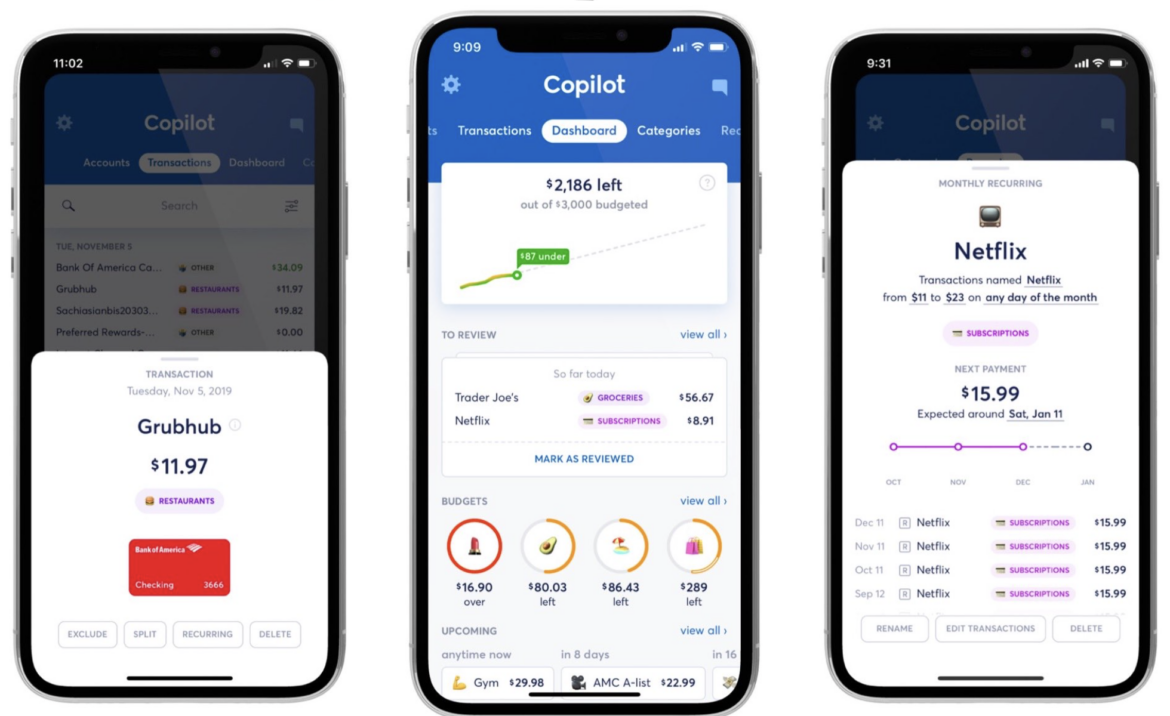
If you live entirely in the Apple ecosystem, Copilot is arguably the most beautifully designed finance app of 2026. It leverages highly advanced on-device machine learning to categorize your transactions with terrifying accuracy.
Unlike older apps that categorize the local gas station as a “Restaurant,” Copilot learns your specific spending habits over time. It predicts your recurring bills, tracks your investments intelligently, and features a brilliant “Review” inbox that asks you to quickly verify ambiguous transactions before they mess up your data.
- The Best Feature: The dynamic, AI-driven budget adjustments. If you overspend on groceries, it intuitively suggests where you can trim the fat in other categories to balance the month.
- The Vibe: A highly intelligent, futuristic assistant that actually makes looking at your bank account aesthetically pleasing.
Why You Actually Need a Finance App in 2026
The reality is that the modern economy is actively designed to make you lose track of your spending. Here is why a dedicated app is no longer a luxury, but a necessity:
- The Subscription Trap: We live in an era where everything from your television streaming services to your digital calendar requires a monthly fee. It is mathematically impossible for the average human brain to track 30 different micro-subscriptions with varying renewal dates.
- Frictionless Spending: Contactless payments and one-click digital checkouts have completely removed the psychological pain of handing over physical cash. Finance apps reintroduce a healthy level of awareness, forcing you to look at the numbers before you click “Buy Now.”
- Outsourcing the Anxiety: Your brain is meant to solve complex problems and generate creative ideas, not calculate how a $14 lunch affects your annual savings goal. Modern apps act as an external financial cortex, carrying that mental load so you can actually sleep at night.
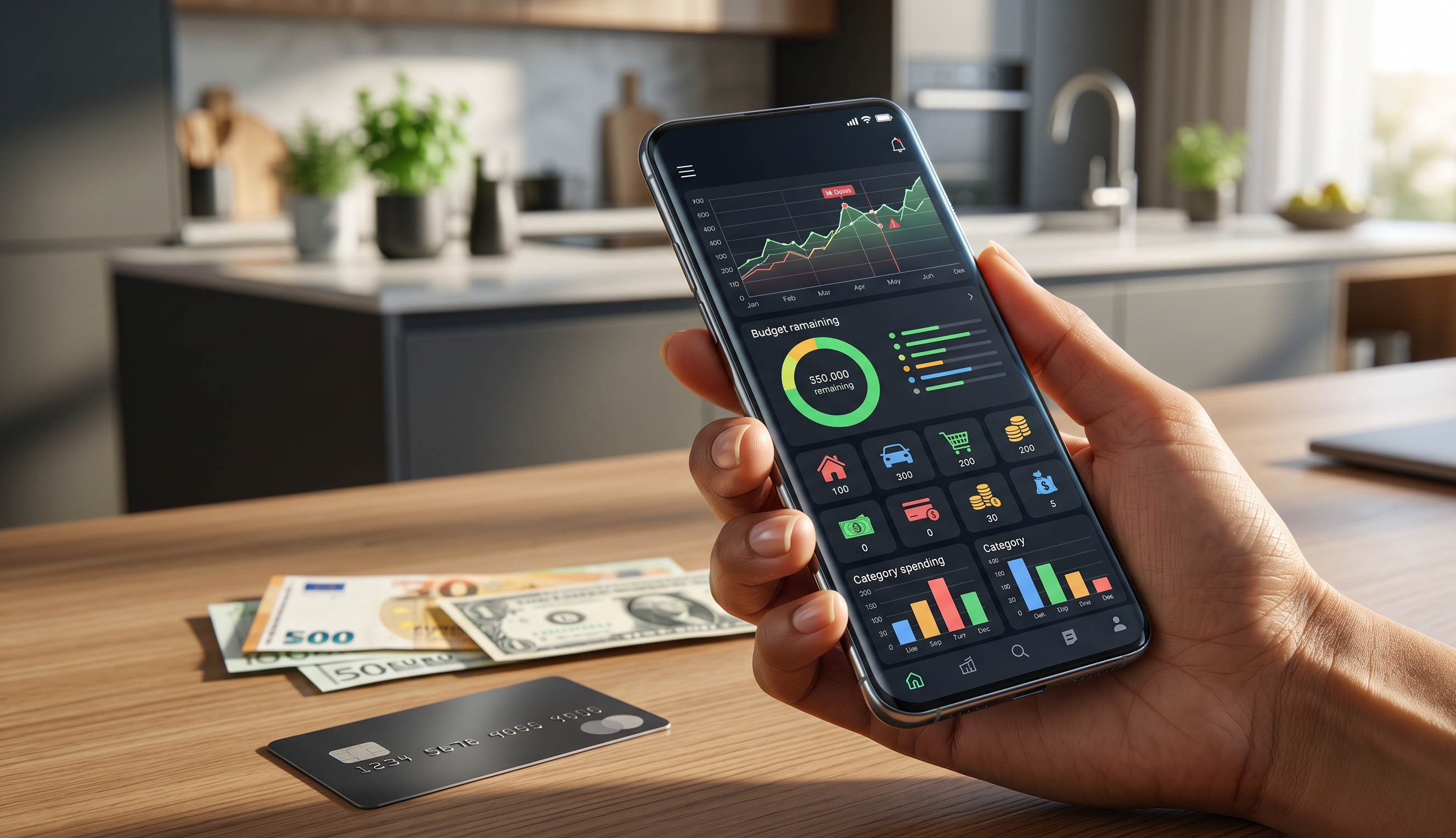
The Bottom Line: Stop Doing the Math
The hardest part of personal finance is not the arithmetic; it is the psychology. These modern applications act as an objective buffer between your daily impulses and your long-term goals, taking the mental fatigue out of money management in an aggressively monetized 2026 economy.
There is no single perfect application out there, only the software that perfectly matches your specific brain – whether that means relying on YNAB for strict boundaries, Copilot for AI automation, or Monarch for the big picture. Do yourself a massive favor: pick the app that feels the least intimidating, spend twenty minutes syncing your bank accounts this weekend, and officially retire that chaotic old Excel spreadsheet. Your future self, and your savings account, will thank you.